About

Related Posts Plugin for WordPress, Blogger... Hi and thanks for dropping by! I fill this blog with beautiful places,interesting people, amusing trivia, secrets and surprises of Japan where I will live and study for 5 years. Sometimes I find good stuff and yes, good deals too! Just enter your email so I can share them with you.

How to Bag Groceries in Japan (Meet the "Packers")


Typical Supermarket Counter is Manned by One Cashier (Photo credit)
I am used to having at least 2 regular figures behind the grocery counter- a CASHIER who takes your items one by one and inputs the prices/quantities of the goods you bought, and a BAGGER who then takes your goods and stuffs them into a box, plastic bag  or paper bag (whichever is applicable). And after your groceries have been "processed" the bagger hands you your items, and you are good to go.
Not in Japan though. Here, you have to BAG IT FIRST BEFORE YOU GO.  That is how it works.
So in a typical Japanese Supermarket, only one personnel cheerfully greets you at the counter. You place your basket on top of the counter and she/he will scan those items one by one and transfer them into another basket. This is actually quite different in my country. We have to take out the items from the basket/pushcart by ourselves and put them on the counter. I remember a friend who got it all mixed up when she went home, and the cashier got a little annoyed because she suddenly put her basket on the counter. @_@
My friend paying in the counter (Thanks Kuya Ronald!)
Anyway, the Japanese will then ask you if you want to have plastic bags  (in Japaneses of course, which I could not quite catch most of the time). I just answer "Hai" (Yes) or "Onegaishimasu" (Please). And after paying for what you bought, the responsibility of packing the goods is all yours.
everything you will ever need is on the bagging table
On a detached table after the cashier, you will find all the space and all the items you would possibly need for packing your groceries. Stuff like plastic bags, scissors, rope, and cutters are yours for the taking. Sometimes the cashier would bag one or two items for you, but for bulk purchases you have to bag them yourself. Once done, you are expected to return the basket and the pushcarts in their proper places. Nobody is actually exempted from this according to my observation, young and old people alike are responsible for themselves.
Meet the "Packers"
bagging groceries Japanese style
my friend posing for demonstration purposes (thanks Joaqs!)
Now is this a good or bad thing? Personally I find it okay. It adds a little physical activity to your otherwise sedentary routine. Also it teaches us to be responsible for whatever we choose to buy. We can control which items go together in one bag. We can divide the items according to how we will carry them/how we will arrange them bike baskets. But on a higher note, I find it a simple gesture to practice independence. We have to start doing what we can do by ourselves and not to depend so much on other people for simple things that we can actually do on our own.

Japanese Rainy Day Acrobatics


grace under pressure (girls riding bikes with umbrellas on one hand during
a typical Japanese rainy day)
This is something I have been wanting to write about because I am excited to share my fascination with you. And because the weather today is very timely, there is no perfect moment to blog about this but now.
Man's reaction to rainy days varies. I personally like it when it rains because it feels colder and the sky has this downcast colors which lulls me to introspection. When clouds shed tears, I am easily invited to do the same both because of sadness and happiness about things that were, are and will be. But rainy days here in Japan sometimes distract me from solitude because sights of local folks doing some sort of circus act paints a smile of amazement on my face.
My country is not a biking community, rather we rely either on walking or riding public jeepneys to get to us to where we want. Normally, rainy days in my country would be something like this. People just walk with their umbrella's or ride jeepneys with "trapal", a plastic sheet to cover the open windows. People would never dare to ride the bike or if they do, they usually wear raincoats. But not in Japan...
A typical rainy day in my country
This is how a Japanese commutes to work/school when it rains. Fearlessly and with great skill, he maneuvers himself on the slippery streets in a balancing act-holding an umbrella in one hand and the bicycle handle on the other. And let me just add that biking routes here are seldom flat. Going to school from my apartment entails traversing  3 hills (not an exaggeration I promise). The Japanese people are among the best bikers I have met in my life and their exposure to biking traces back  to childhood.
A typical Japanese act when it rains
Of course bicycle shops here in Japan have cool products too, especially for the rainy days. If you have a very faint heart but is eager to avoid the downpour, you can try out this umbrella holder for a price.
an umbrella holder might save your rainy day life (Photo credit)
I have tried biking with an umbrella once or twice and I can manage to do so if the road is flat. But once I feel a slight wiggle, I tense up and then hold the bike handle altogether. From trying and trying this simple thing, I have realized something. You just have to pedal continuously and without fear because it keeps you going and stops the bike from falling. Holding the umbrella is not the most difficult thing to do, it is trusting that even if you hold just one handle you are going to be safe. The same goes in many of life's challenges, I guess.
stunts that know no age
And once a biker, always a biker because this challenging act can be done by people of all ages. Mastery comes with constant practice and once learned and continuously applied, it will never be forgotten.
One last look with the rain so you can see what I mean (Photo credit)

7 Tulips I Am Tempted To Pick


Bed of Tulips
Spring is Tulip Time!!!! Tulip! Tulip! Tulip! Jump and Split! (^_^) Sorry for getting all hyped up.
I think it is not very difficult to recognize a tulip, with their large cup-shaped flowers and tall stem. As a backgrounder, Tulips are some of the most popular spring flowers of all time, and the third most popular flowers worldwide next only to the Rose and Chrysanthemum (my source here).
To be a bit geeky,
Kingdom:Plantae
Division: Magnoliophyta
Class: Lilliopsida
Order: Liliales
Family:Liliaceae
Genus:Tulipa
Seeing a lot of beautiful tulips here in Japan made me appreciate their colors and every time I see one, I am so tempted to pick a flower and bring it home. Luckily I do not succumb to these temptations. But as I share some pictures with you (shared through my Indonesian friend Sari), I am sure you will hear those evil voices too. 
Enjoy!
1. Yellow Tulips
Yellow tulips used to represent hopeless love but are now associated with cheerfulness and sunshine.
Yellow Tulips
2.  White Tulips
White tulips are used to claim worthiness or to send a message of forgiveness. (Very controversial, I guess)
White Tulips
3. Red Tulips
Do I need to say it? I am sure you know the meaning of red tulips very well. But aside from declaring true love, for those who practice feng shui, red tulips help bring fame into one's life. (Hmmmm...now I am really considering....)
Red Tulips from my Japanese friend's garden
4. Pink Tulips
Less romantic than red tulips, pink tulips symbolize care and encouragement to someone. 
Pink Tulips (from aidken of Flickr)
5. Orange Tulips
Orange tulips symbolize fascination, warmth and happiness.
Orange Tulips (Photo credit)
6. Mixed Tulips
Anything goes with this crazily beautiful tulips. Splash of colors here, and bit of blending and sunshine there makes these tulips perfect eye candies. Don't you just want to eat them?
Pink and White
Red and White
Red and Orange (Photo from robertodevido or Flickr)
7. Purple Tulips
Last but definitely not the least. Rather, they are the hardest ones to resist!!!! These tulips bear one of my favorite colors in life. The color purple is often referred as a symbol of royalty, power, luxury and serenity.
A purple tulip garden ("Hope Patch") is also a reminder that the future can be better and that tomorrow brings another day.
(Pick me, pick me not, pick me, pick me not, stop me please!)
Purple Tulips To Dye For (At least for me)
Most of the shots are taken from Banpaku kinen koen (The Expo Commemoration Park) in Northern Osaka. It is a 15-20 minute bike-ride from my apartment and as Handai students we can enter for free. 
By the way, I got the meanings here:
 What Do Tulip Colors Mean? | eHow.com http://www.ehow.com/about_6736795_do-tulip-colors-mean_.html#ixzz1sltZTaeS
And lastly, while writing this blog I found this. So cute, desu ne?
Helly Kitty Tulips

10 Beautiful Sakura Pictures Your Eyes Could Feast Upon


Oh Spring! My blogposts this month are dedicated to you. Here are some of the most beautiful Sakura (cherry blossom) shots I have pooled from the net, from my collection and that of my friends. Take a break from your busy day and as the saying goes..take time to smell (and revel at the sight) of flowers
P.S. To my loved ones, how I wish you could share these sights with me...^_^
Sakura 1 (Courtesy of my labmate from Thailand, Yo)
Sakura 2 Just outside my house
Sakura 3 Somewhere in Osaka University
Sakura 4 The famous Sakura Tree Near My Laboratory (courtesy of my friend Karlou)
Sakura 5 White Blossoms from Heaven (Courtesy of Yo)
Sakura 6 More of those heavenly things (From mellow_stuff of Flickr)
Sakura 7 Where biking is a pleasure (Courtesy of my friend Ate Susan)
Sakura 8 I love you Pink (Photo credit)
Sakura 9 Pink is Love (from Focx Photography in Flickr)
Sakura 10 Have a date with me here in Kyoto (Photo Credit)
When I look at these photos, I learn to love life more and to appreciate how beautiful the world is despite all odds. And silently I whisper, "your creation is good my Maker".

The Dark Side of Japanese Springtime That You May Not Know


Disclaimer: Please don’t get me wrong. I don’t hate Spring at all. In fact it is the best thing that ever happened to me since Winter (if you know what I mean). But coming from a country with only two seasons (wet and dry, and something in between which could count as the 3rd), my concept of Spring can be best described by the cliché “a bouquet of flowers and a bag full of sunshine” and so discovering this dark side of Spring in Japan really came as a surprise.

Weeks before the much awaited Sakura (cherry blossoms) paradise and the blooming of plums and other spring flowers, this new human hype dominated the sights.
Many people were wearing masks, sneezing and coughing here and there (my friends and labmates included). There were people with red and itchy eyes, people with sore throat and other unexplainable (or maybe psychological) feelings. Allergies flare up at their worse! And even people who never had any allergies eventually developed them here.

And the culprit? Just the littlest of things. Pollen. Flowers don't bloom without a price.

Cherry blossom pollen.
Coloured scanning electron micrograph (SEM) of pollen grains from a cherry tree flower (Prunus yedoensis)
Photo Credit

At the gates of Spring,  Hay fever welcomes you with open arms. Welcome to Spring in Japan indeed!

What is Hay Fever anyway? (source)

Hay fever known as allergic rhinitis, is a common condition that shows signs and symptoms similar to a cold with sneezing, congestion, runny nose and sinus pressures.

Causes: allergic response to airborne substances, such as pollen - unlike a cold which is caused by a virus.

Important Terms:
If you are in Japan, you may want to familiarize yourself with the following terms to get by this allergy season.  Source here.

花粉症  かふんしょう kafunshou         hay fever
花粉   かふん   kafun                     pollen
 アレルギー     arerugii                   allergy


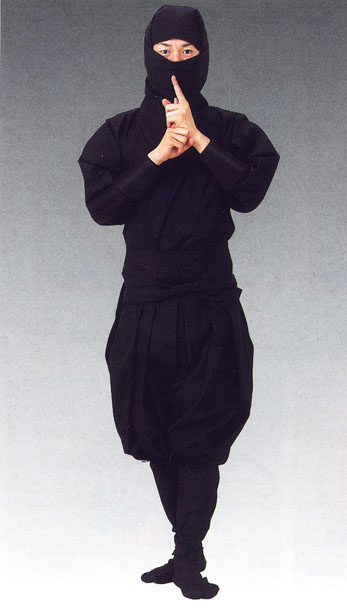
I have a friend who lives in Japan for 3 years now. She was allergy free during the first year but the year after that it hit her, the dreaded pollen allergy, and now that spring has come, masks have been part of her daily wardrobe. We call her ninja sometimes because she wears a mask that looks something like this.
Department store sales clerk displays anti-hayfever mask and goggles at Toyko's Mitsukoshi department store
                            
But Japan is actually prepared for Hay Fever with all of their creative and innovative solutions like face masks, nose masks, anti-pollen spray, and the like.


Nevertheless, Spring is still a beauty. Just look at the picture below and for sure you will agree. I did not experience hay fever this year but as the urban legend goes around here, I might develop it in a year's time. Who knows? See you in Japan next spring!


Related Posts Plugin for WordPress, Blogger...
 
Japan Tidbits © 2012 | Designed by Rumah Dijual, in collaboration with Buy Dofollow Links! =) , Lastminutes and Ambien Side Effects